Fruit Drama Videos
The AI Soap Opera Trend Blowing Up TikTok
Fruit drama videos are mini soap operas starring fruit characters - betrayal reveals, love triangles, family secrets - compressed into six scenes with a gut-punch ending. A grape catches his wife at a cafe with the wrong pineapple, and suddenly two million strangers are demanding part 2.
Watch: How to Make an AI Fruit Story Video
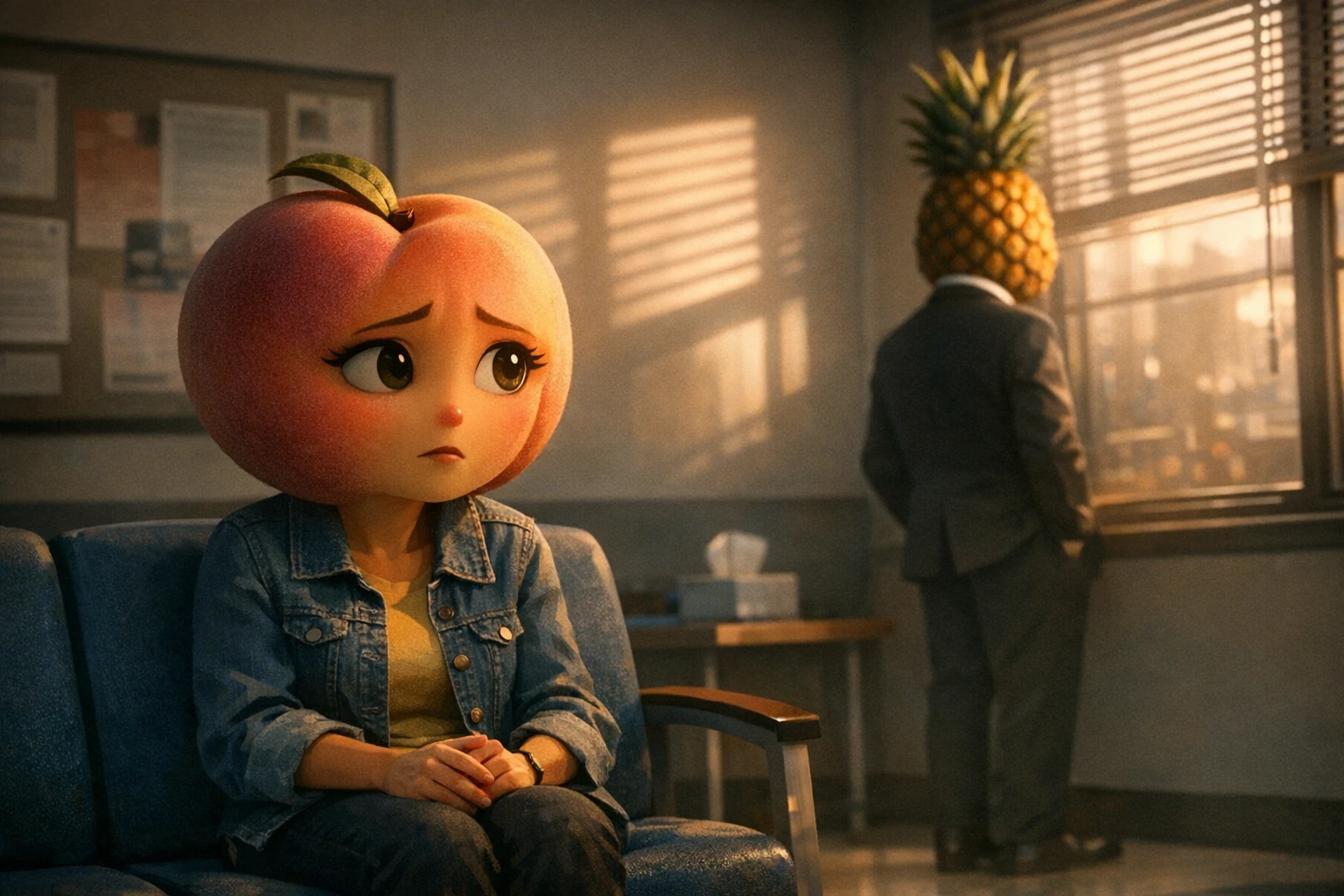
A fruit drama in full swing - absurd cast, very real tension
What Are Fruit Drama Videos?
A fruit drama is a short, story-driven video where 3D fruit characters - fruit heads, human bodies, real outfits, lip-synced dialogue - live through the kind of plots you'd expect from a daytime soap. A doctor's appointment that exposes a secret. A will reading that splits the family. A wedding objection at the worst possible moment.
The formula is simple: absurd cast + genuine story = viewers who can't look away. The fruit gets people to stop scrolling. The story gets them to stay. And the ending - always a gut punch - gets them typing "PART 2 NOW" in the comments. It's the same emotional machinery as a soap opera, running on characters like a grape in a black turtleneck and a pineapple in a tailored suit.
The format grew out of the broader wave of fruit content - if you've seen fruit surgery videos or the wider fruit AI TikTok trend, fruit dramas are the storytelling branch of the same family tree. Instead of one weird clip, you get a plot.
The anatomy of a fruit drama:
Why Fruit Dramas Hook Viewers
Four reasons this AI fruit drama format keeps beating polished content
The Absurd Premise Stops the Scroll
A peach crying in a hospital waiting room is not something your brain can scroll past. The visual is so unexpected that viewers stop just to figure out what they're looking at - and by then, the story already has them.
Real Story Beats Create Investment
Fruit dramas don't coast on the joke. Each episode has a real arc - setup, turn, payoff - so viewers feel genuine suspense. The absurdity gets the click; the storytelling earns the watch time. That combination is what algorithms reward.
Gut-Punch Endings Force Comments
Ending on the reveal - not the resolution - leaves viewers with unfinished emotional business. They do the only thing they can: comment. "PART 2 NOW" isn't just funny, it's an engagement signal that pushes your drama to millions more feeds.
Recurring Characters Turn Viewers Into Fans
Once viewers know the cast - the scheming grape, the long-suffering peach - they come back for episodes, not just videos. A recognizable fruit soap opera cast turns one-time viewers into followers who watch everything you post.
5 Fruit Drama Plot Ideas That Print Views
"The Ultrasound Reveal"
A young fruit couple at a routine scan - until the doctor's face changes. What the screen shows exposes a secret that changes everything between them. Medical settings are instant tension: viewers know something is coming, they just don't know what, so they watch every second waiting for it.
"The Will Reading"
The family gathers in the lawyer's office, and grandpa Pomegranate's inheritance goes to the last fruit anyone expected. Inheritance drama works because every viewer has a family - and the reveal invites them to argue in the comments about who actually deserved it.
"Caught at the Cafe"
Your best friend, spotted through the cafe window, laughing with the wrong pineapple. The betrayal-by-sighting plot is a classic because it puts the viewer in the protagonist's shoes: what would you do? Confront them now, or gather evidence? The comments will tell you - loudly.
"The Wedding Objection"
"Speak now or forever hold your peace" - and someone stands up. The wedding objection is the highest-stakes moment drama offers: a public reveal in front of everyone the characters love. End the episode the instant they stand, before they say a word, and watch your comment section detonate.
"The DNA Test"
A kiwi raised in a family of limes finally asks the question everyone avoided. Identity reveals hit harder than any other plot because the stakes are personal, not situational. Whatever the test says, the family is never the same - and neither is your follower count.
How to Make Your Own Fruit Drama
One idea in, a published multi-scene episode out - here's the short version
Type Your Idea, Pick a Story Angle
Open Fruit AI Stories and type your idea - or paste a script if you already have one. The AI writes three different story angles, each a complete 6-scene arc with a setup, a turn, and a gut-punch ending. Pick the one that hits hardest, or regenerate for three fresh takes.
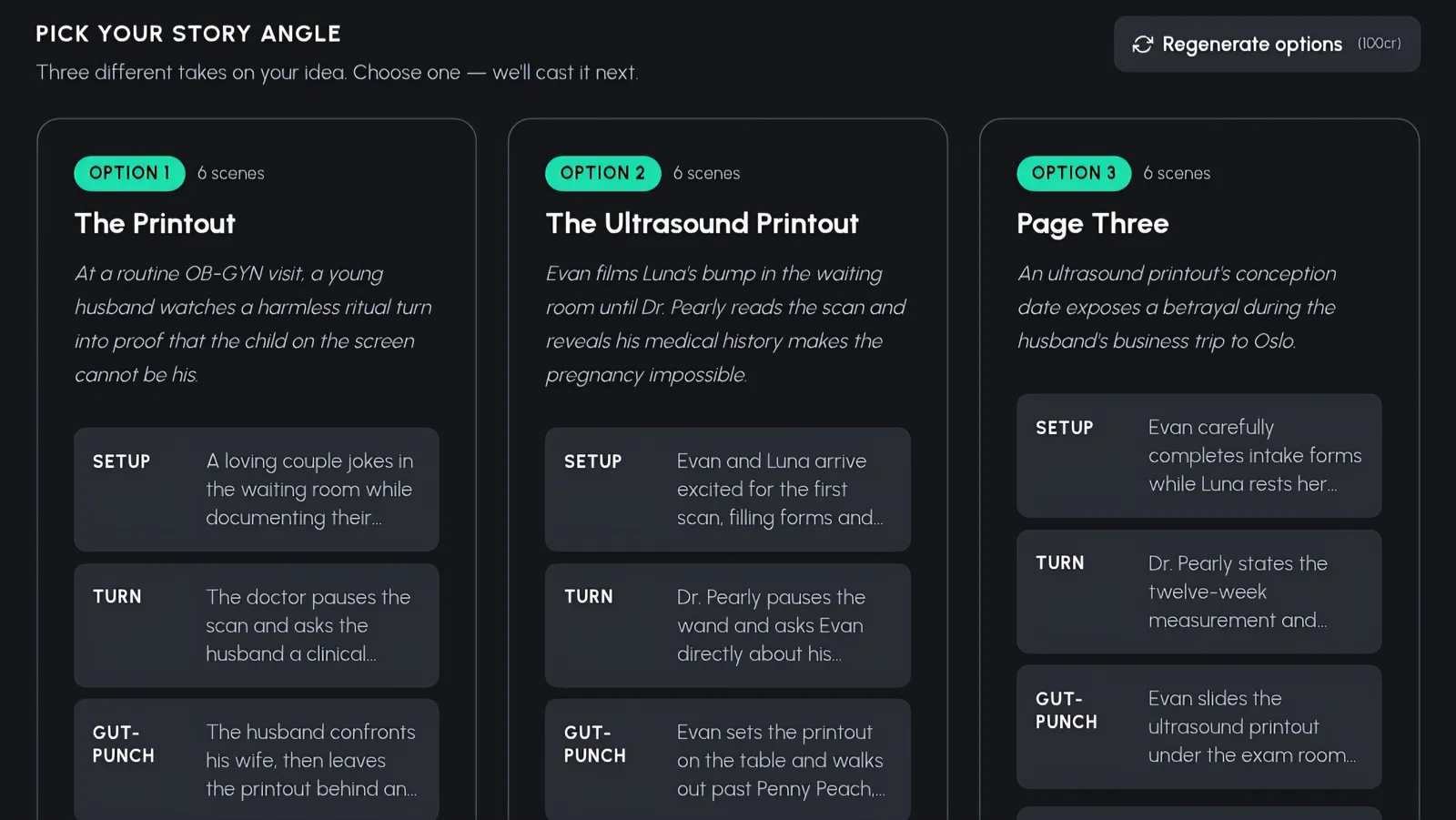
Three drama angles per idea - each with its own setup, turn, and ending
Cast and Review Your Fruit Characters
Cast the episode from your saved characters and the community library, or hit Auto-pick and let the AI assign roles. There are 16 fruit types - strawberry, grape, pineapple, kiwi, pomegranate, and more - in three visual styles: 3D Stylized, Realistic, or Cartoon. Review the cast and regenerate or tweak any character before you commit.
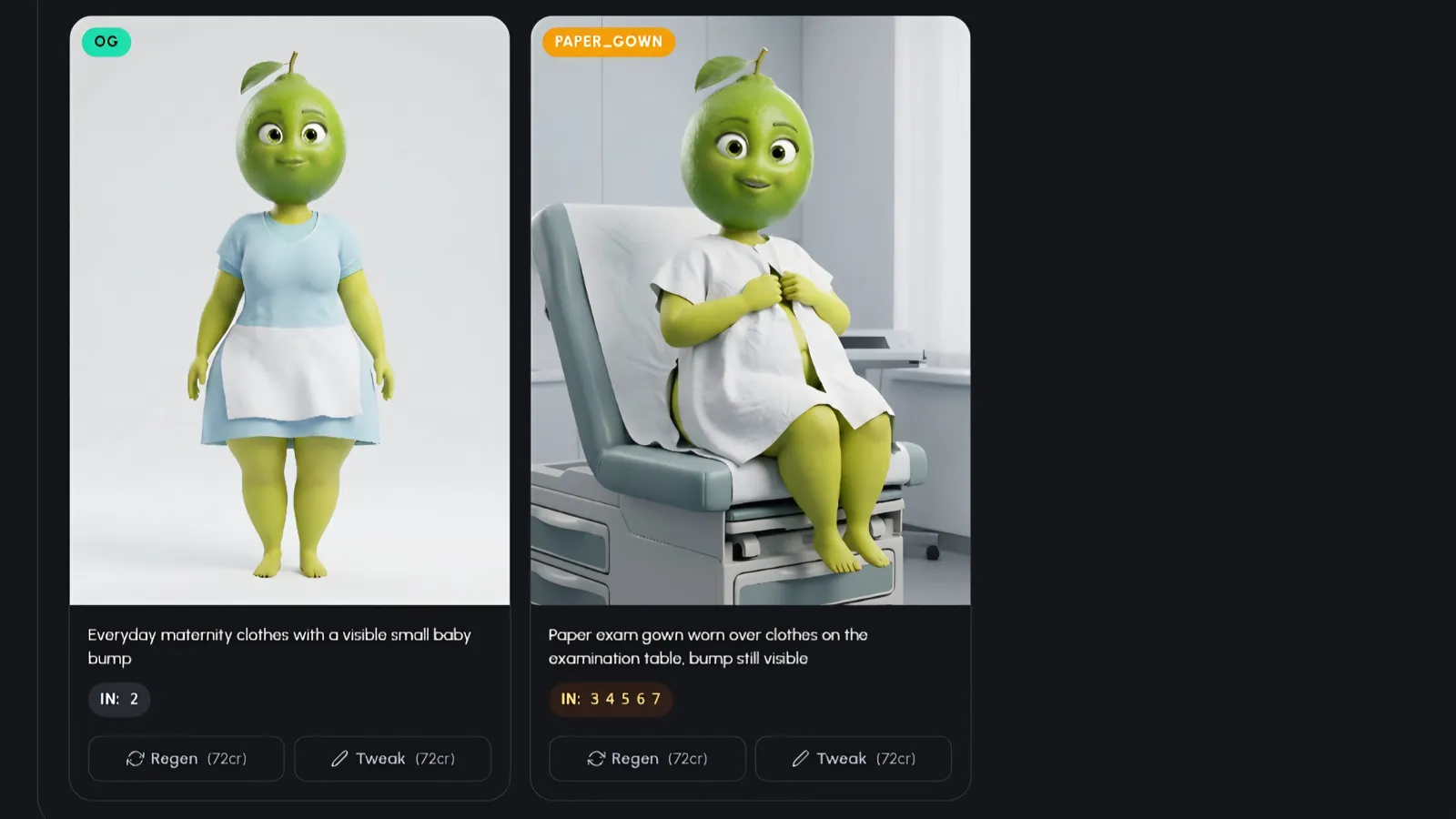
Review the cast - regenerate or tweak any character before rendering
Set the Format and Hit Render
Choose background music, video length, and aspect ratio - 9:16 for TikTok and Reels, 16:9 for YouTube, or 1:1 square. Pick your script quality and a video quality tier (Pro or Lite), then hit Render and watch the progress bar do the work.
Caption and Auto-Publish
When the render finishes, copy the ready-made SEO caption and auto-publish to your connected accounts. That's the whole pipeline - no editing timeline, no voice actors, no animation software. For the full walkthrough with every setting explained, see our guide on how to make fruit story videos.

One gut-punch ending and viewers binge the whole series
See a Fruit Drama in Action
Watch how Fruit AI Stories turns one idea into a full episode
Series Strategy: Turn One Drama into a Binge
One viral episode is luck. A viral fruit series is a system. Here's how creators turn a single gut-punch into a season - and if you want to see what's currently working in your niche, browse the top-performing short-form ads and organic formats on the TikTok Creative Center.
End Every Episode on a Cliffhanger
Cut to black at the reveal, never after the resolution. The unanswered question is what carries viewers to the next episode - resolve it in the first scene of the follow-up, then plant a new one before the end.
Keep the Cast Consistent
Use your saved characters so the same faces carry the story from episode to episode. Viewers form attachments to specific characters - the moment they recognize "that grape from part 1," you've converted a viewer into a fan.
Number Your Episodes
"Part 3" in the caption does two jobs: it tells new viewers there's a backlog to binge, and it gives the algorithm a reason to serve earlier parts. Series numbering is free retention - never skip it.
Reply to Comments With the Next Part
When someone comments "PART 2 NOW," reply to that comment with the next episode. It rewards your most engaged viewers, doubles your engagement signals, and turns your comment section into a distribution channel.
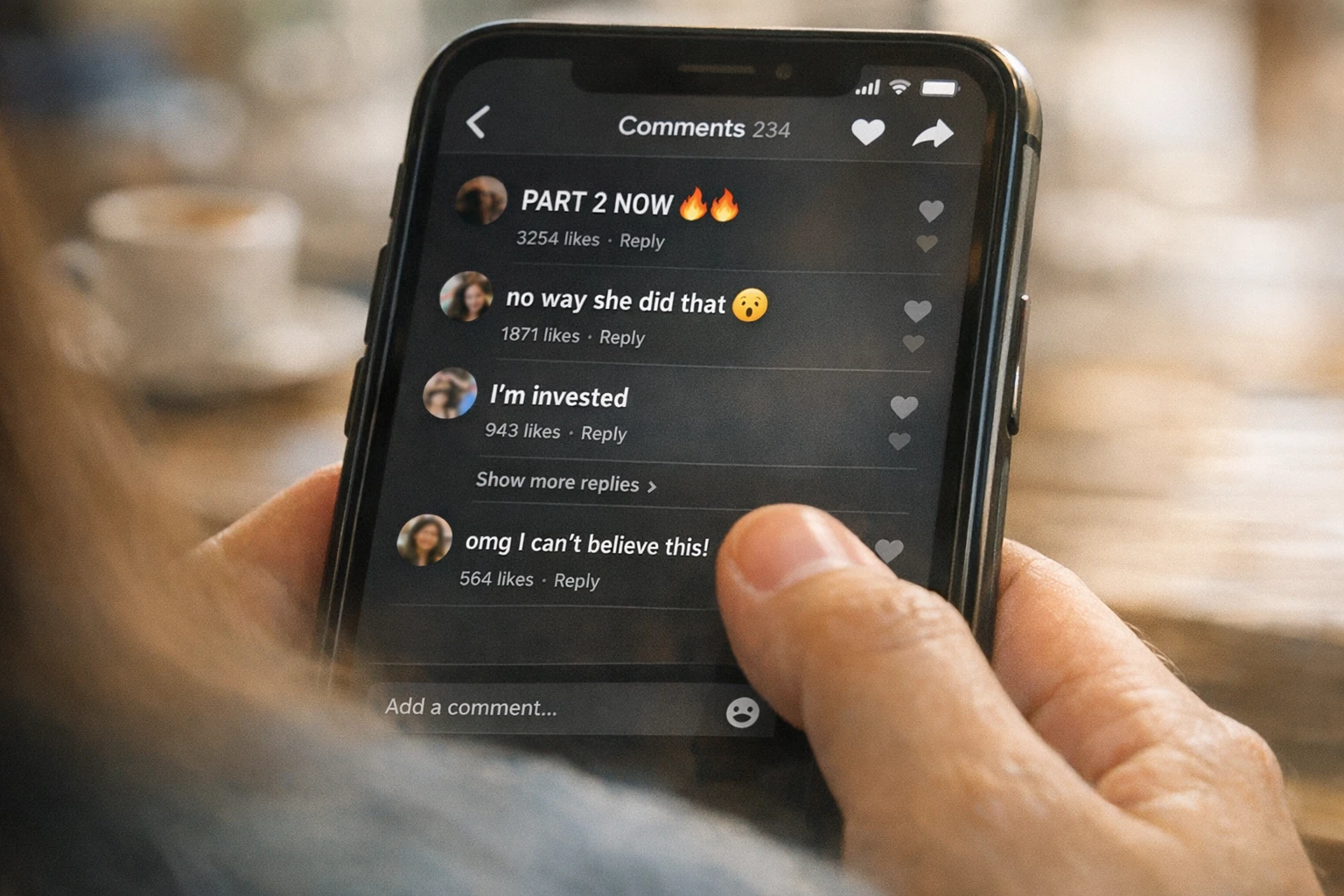
The gut-punch ending does its job - the comments demand more
Fruit Drama Video Tools Compared
| Feature | Autoclips | AutoShorts.ai | Crayo AI | Manual Animation |
|---|---|---|---|---|
| Multi-Scene Fruit Dramas | Yes - Built In | No | No | Build from scratch |
| Lip-Synced Character Dialogue | Yes | Voiceover only | Voiceover only | Frame-by-frame |
| 3 Story Angles Per Idea | Yes | Single script | Single script | Hire a writer |
| Recurring Character Library | Saved + Community | No | No | Manual asset reuse |
| Aspect Ratios | 9:16, 16:9, 1:1 | 9:16 focus | 9:16 focus | Any (manual) |
| SEO Caption + Auto-Publish | Built In | Scheduling | Export only | Do it yourself |
| Cost | From 240 credits (~$1.20/scene) | Subscription | Subscription | $500-$2,000+ per minute |
Looking for the full breakdown of the tool itself? See the fruit story video maker overview.
Frequently Asked Questions
Everything you need to know about making fruit drama videos
What are fruit drama videos?
Fruit drama videos are short, AI-generated soap operas starring 3D fruit characters with human bodies and lip-synced dialogue. Think betrayal reveals, love triangles, and family secrets - compressed into a 6-scene arc with a setup, a turn, and a gut-punch ending. The mix of absurd characters and genuinely emotional storytelling is why the format is blowing up on TikTok, Reels, and Shorts.
Why are fruit dramas going viral?
Fruit dramas work because they combine two things algorithms love: an absurd premise that stops the scroll, and real story beats that keep people watching to the end. A grape confronting his wife at a cafe is ridiculous - but the betrayal is real, so viewers get invested. The gut-punch endings drive floods of comments demanding part 2, which pushes the video to even more viewers.
How do I make a fruit drama video?
With Fruit AI Stories by Autoclips, you type your idea, and the AI writes three different story angles - each a complete 6-scene drama. Pick the one you like, cast your fruit characters (or hit Auto-pick), choose music, length, and aspect ratio, then hit Render. When it's done you get a ready-made SEO caption and can auto-publish straight to your connected accounts.
How much do fruit drama videos cost to make?
Cinematic story scenes start at 240 credits (~$1.20 per scene). Compare that to commissioned animation, which runs $500-$2,000+ per minute, and you can see why solo creators are pumping out entire fruit drama series on a budget that used to buy a single scene of traditional animation.
Can I keep the same characters across episodes?
Yes. Your fruit characters live in your saved characters library, so the same grape in a black turtleneck can betray, apologize, and betray again across an entire season. You can also pull characters from the community library, and regenerate or tweak any character before rendering. Consistent characters are what turn one viral video into a binge-worthy series.
What's the best length for a fruit drama?
The 6-scene arc naturally fits short-form video, and you control the total length in the video settings before rendering. For TikTok and Reels, shorter episodes with a hard cliffhanger tend to get the best completion rates - and completion rate is the metric that gets your drama pushed to new viewers. If a story feels too big for one video, split it into parts and let the cliffhanger do the marketing.
Start Your Fruit Drama Series Today
The trend is hot, the format is proven, and the barrier is one typed idea. Write the setup, let the AI pitch you three endings, cast your fruit, and publish. Episode one is closer than you think.
Cinematic story scenes start at 240 credits (~$1.20 per scene) - 16 fruit characters - 3 visual styles