How to Start a Fruit Story Channel
The Faceless Niche Nobody Is Talking About Yet
A fruit story channel is a faceless channel where the entire cast is fruit - a scheming grape, a heartbroken peach, a pineapple with a secret - and every episode is a multi-scene story with a gut-punch ending. The episodes practically write themselves, the publishing runs on autopilot, and viewers come back for the next episode. Here's the complete playbook.
Watch: How to Make an AI Fruit Story Video
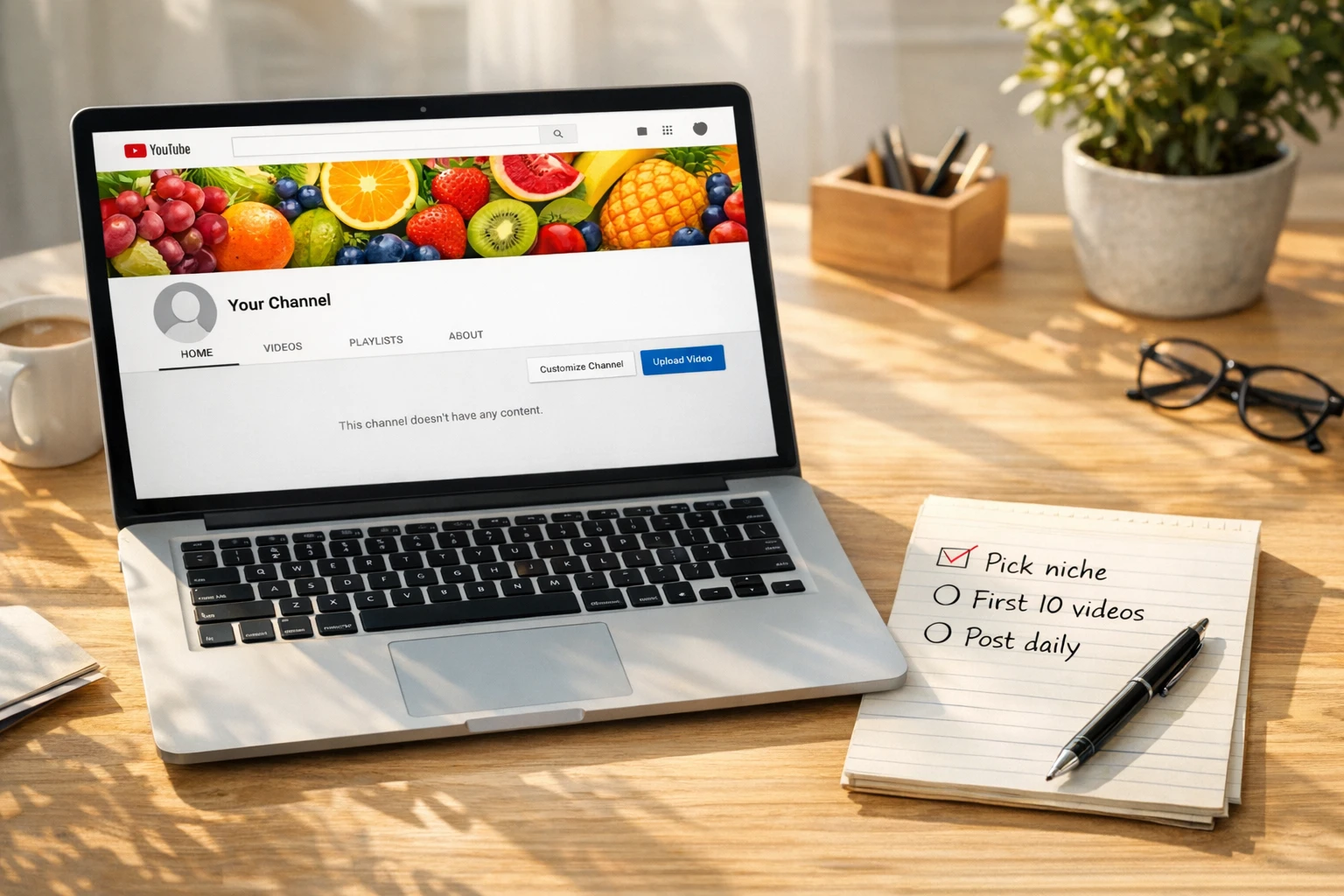
Launching a fruit story channel takes a laptop and an idea - no camera, no studio
Why a Fruit Story Channel Is the Smartest Faceless Play
Most faceless channel ideas chase views. Story channels build subscribers.
The problem with most faceless channel ideas - quote pages, stock-footage compilations, text-to-speech facts - is that every video starts from zero. Someone watches, maybe likes it, and forgets you exist. There's nothing to come back for.
A faceless fruit channel flips that. When your videos are episodes in an ongoing story, starring the same characters, viewers don't just watch - they follow. They want to know what the grape does next. That's why story content builds subscribers instead of just views, and why we'd call the fruit story niche one of the most underpriced faceless plays of 2026: very few creators are doing serialized character content, and the tooling to do it now costs pocket change.
Recurring Characters = Subscriber Loyalty
People subscribe to characters, not clips. When the same pineapple shows up in episode 12 that they met in episode 1, viewers feel like they know her. That attachment is what turns a casual scroller into a subscriber who watches every upload.
Series Format = Binge Sessions
Episodic content triggers the "just one more" effect. When someone discovers episode 7, they go back and binge episodes 1 through 6. Every new video lifts the watch time of your entire back catalog - a compounding effect one-off videos never get.
No Camera, No Voice, No Editing
Your fruit cast performs every line with lip-synced dialogue. You never film, never record a voiceover, never touch a timeline. Type an idea, pick a storyline, cast your characters, and a finished multi-scene episode renders while you plan the next one.
Episodes Cost About a Coffee
Cinematic story scenes start at 240 credits (~$1.20 per scene), so a full episode costs about what you'd pay for a coffee. Commissioned animation runs $500-$2,000+ per minute. That gap is exactly why this niche is underpriced right now.
Step 1: Pick Your Lane
Successful channels are about one thing. Choose your lane before you start a fruit channel and stick to it for at least 30 days.
Drama
Soap opera arcs, betrayals, secrets, and gut-punch endings. Drama lanes get the strongest comment sections because viewers argue about what a character deserved.
Explore fruit drama videosComedy
Skits, roasts, and absurd situations. Comedy is the most shareable lane - a lemon roasting a melon gets sent to group chats, and shares are rocket fuel for reach.
Explore funny fruit videosKids
Wholesome learning stories about sharing, honesty, and courage. Kids content gets rewatched on repeat by the same households, which does wonders for watch time.
Explore fruit stories for kidsStep 2: Build Your Recurring Cast
This is the step most faceless creators skip, and it's the one that separates a fruit story youtube channel that grows from one that stalls. Your characters are the franchise. In Fruit AI Stories, you cast from a library of saved and community characters - fruit-headed 3D characters with human bodies, outfits, and personalities - or let Auto-pick assemble a cast for you. There are 16 fruit types and 3 visual styles (3D Stylized, Realistic, and Cartoon), so your channel can look like nobody else's.
The key feature for a channel is saved characters: keep the same grape, the same pineapple, the same peach across every single episode. Same faces, same outfits, same personalities. That continuity is what makes viewers feel like they're watching a show instead of a random clip - and it's why they hit subscribe. They aren't subscribing to you. They're subscribing to your characters.
A simple starter cast that works:
Step 3: Launch with 10 Episodes
Don't launch with one video and wait to see how it does. Batch your first season. The workflow makes this almost unfair: type one idea, and the AI writes three story angles - each a complete 6-scene arc with a setup, a turn, and a gut-punch ending. Pick the one you like or regenerate for three more. That means 10 ideas gives you up to 30 potential episodes before you've written a single line of dialogue yourself.
For each episode you also choose the music, length, aspect ratio (9:16 for Shorts and TikTok, 16:9 for full YouTube, 1:1 for feeds), script quality, and a quality tier - Pro when you want maximum polish, Lite when you're testing ideas cheaply. If you want the full step-by-step production walkthrough, see our guide on how to make fruit story videos.
A stocked backlog does two things for you: it guarantees you never miss a posting day in your critical first month, and it takes the emotional pressure off any single video. When episode 3 underperforms, you don't spiral - episode 4 is already rendered.
Step 4: Post Daily with Auto-Publish
Posting is where most faceless channels quietly die - not because the content stops working, but because uploading to three platforms every day gets old by week two. Fruit AI Stories removes that failure mode entirely. Connect your accounts once, and every finished episode auto-publishes to all of them. Your channel keeps posting even on the days you don't open your laptop.
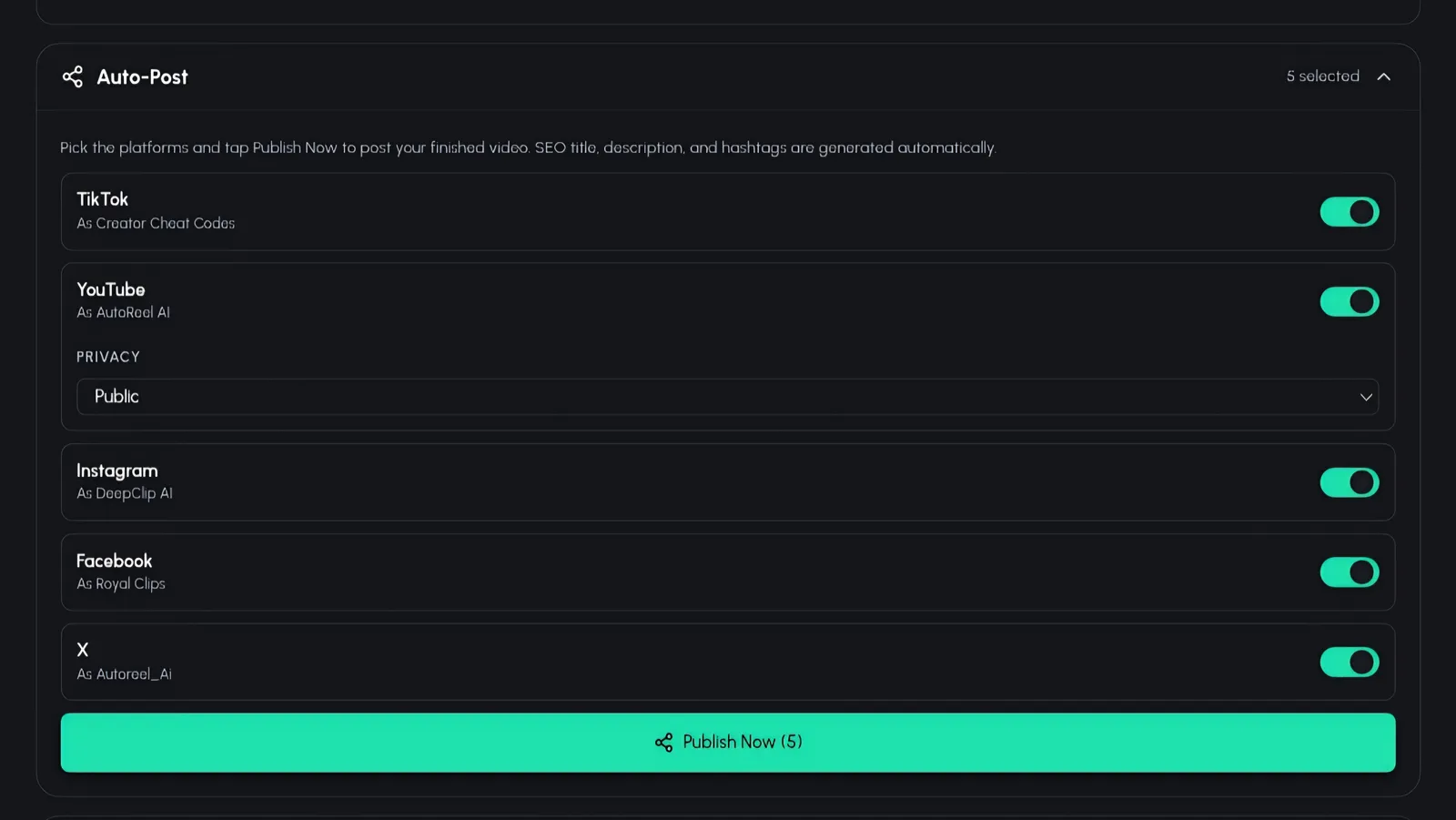
Connect your accounts once and every episode publishes automatically
Every render also comes with a ready-made SEO caption - title, description, and keywords written for you. Copy it as-is or tweak a line, but never stare at an empty description box again. Small thing, huge compounding effect: properly captioned videos keep getting discovered through search months after you post them.
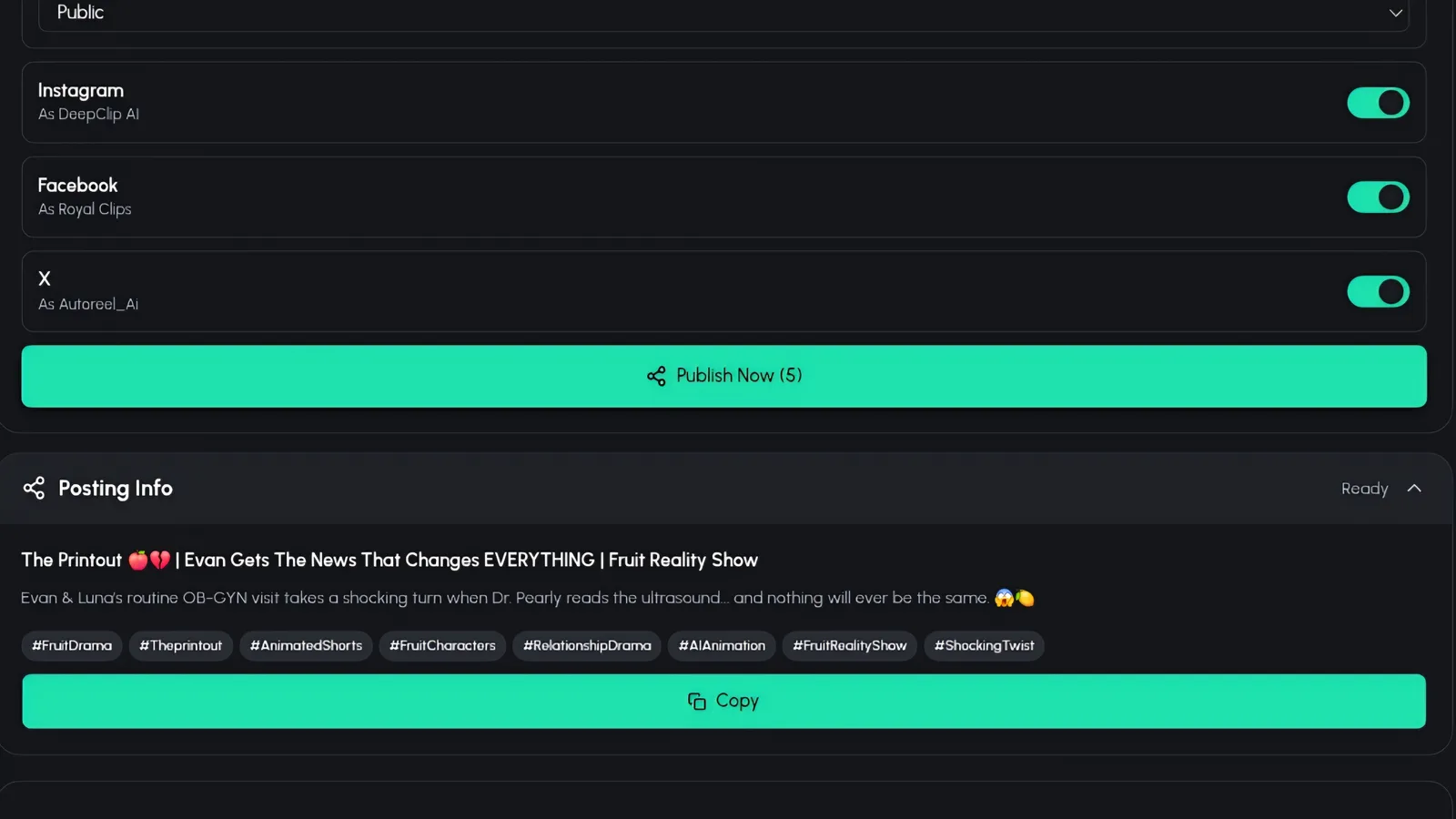
Every episode ships with an SEO caption ready to copy
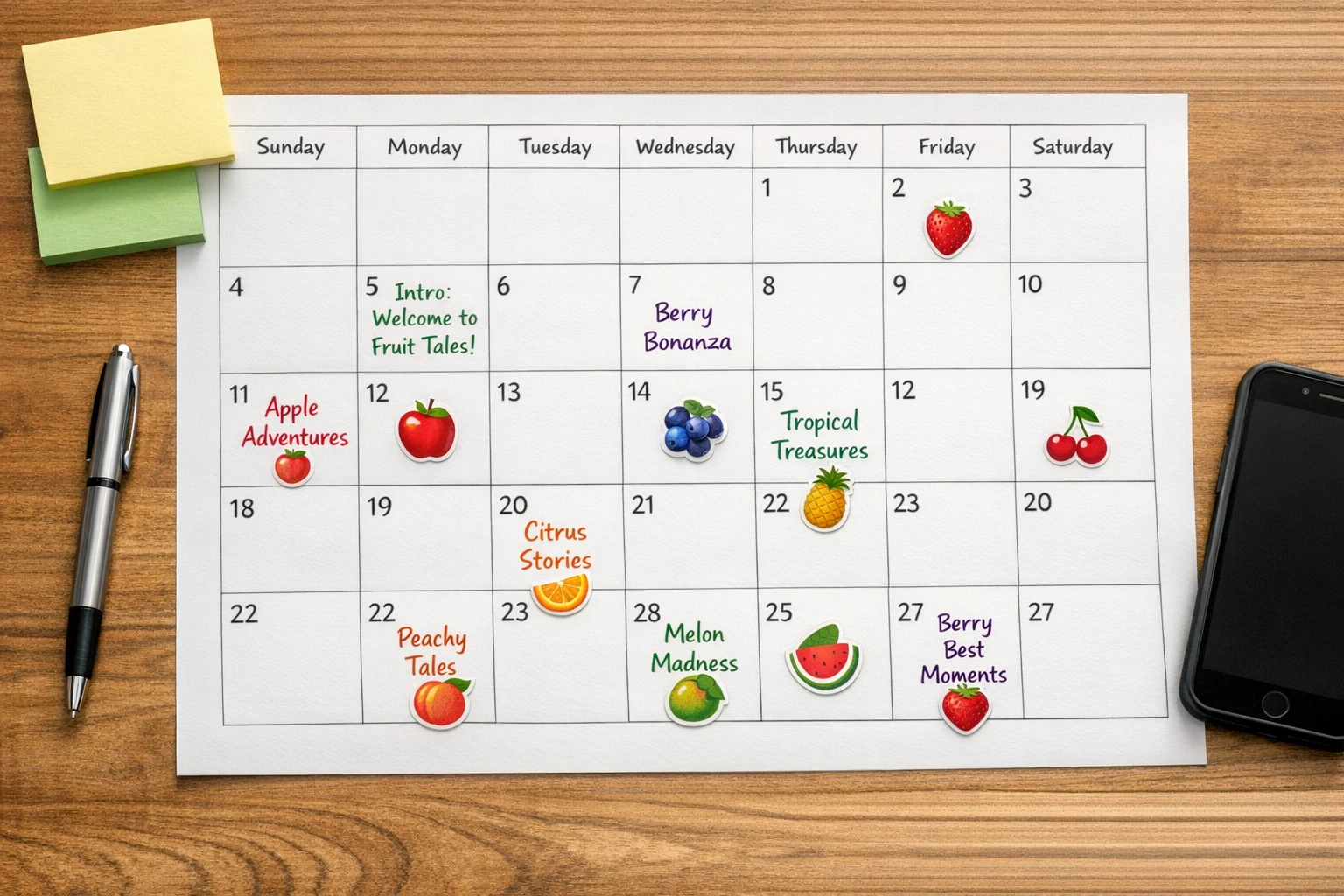
A month of episodes, planned in an afternoon
Your First 30 Days
A week-by-week plan to go from zero to a real channel
Week 1: Cast + First 5 Episodes
Lock in your lane, build and save your recurring cast, and produce your first 5 episodes. Don't obsess over perfection - your only goal this week is to establish who your characters are and get real videos live. Post the first one the day it renders.
Week 2: Daily Posting + Comment Replies
Ship one episode every day and reply to every single comment. Early comments are gold - they tell you which characters people are attaching to, and every reply signals to the platform that your channel has an active community. Ask questions in your replies to keep threads going.
Week 3: Double Down with a Part 2
By now one episode will be clearly outperforming the rest. Make a Part 2. Sequels to a proven story are the closest thing to a guaranteed win in this niche - the algorithm already knows who liked Part 1, and those viewers click a continuation almost every time. This is where subscriber counts start moving.
Week 4: Series Branding + Thumbnail Consistency
Name your series, standardize your episode titles, and make your thumbnails instantly recognizable - same characters, same style, same framing. When someone who watched one episode sees your next one in their feed, they should know it's yours in half a second. The YouTube Creators resources are worth a read this week if YouTube is your home base.
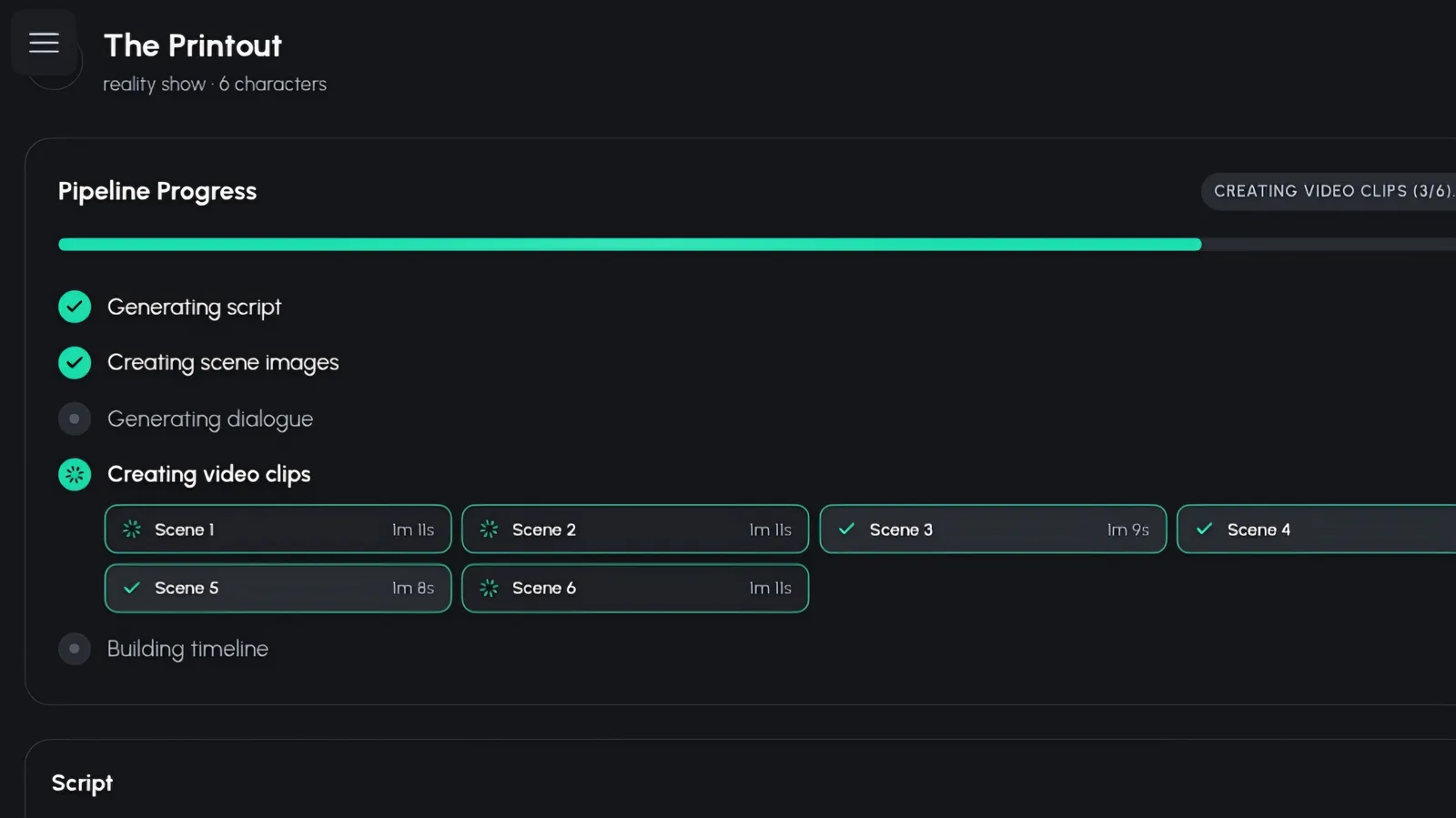
Batch renders run in the background while you plan the next episodes
See Fruit Story Episodes in Action
Watch what a finished fruit story episode looks like
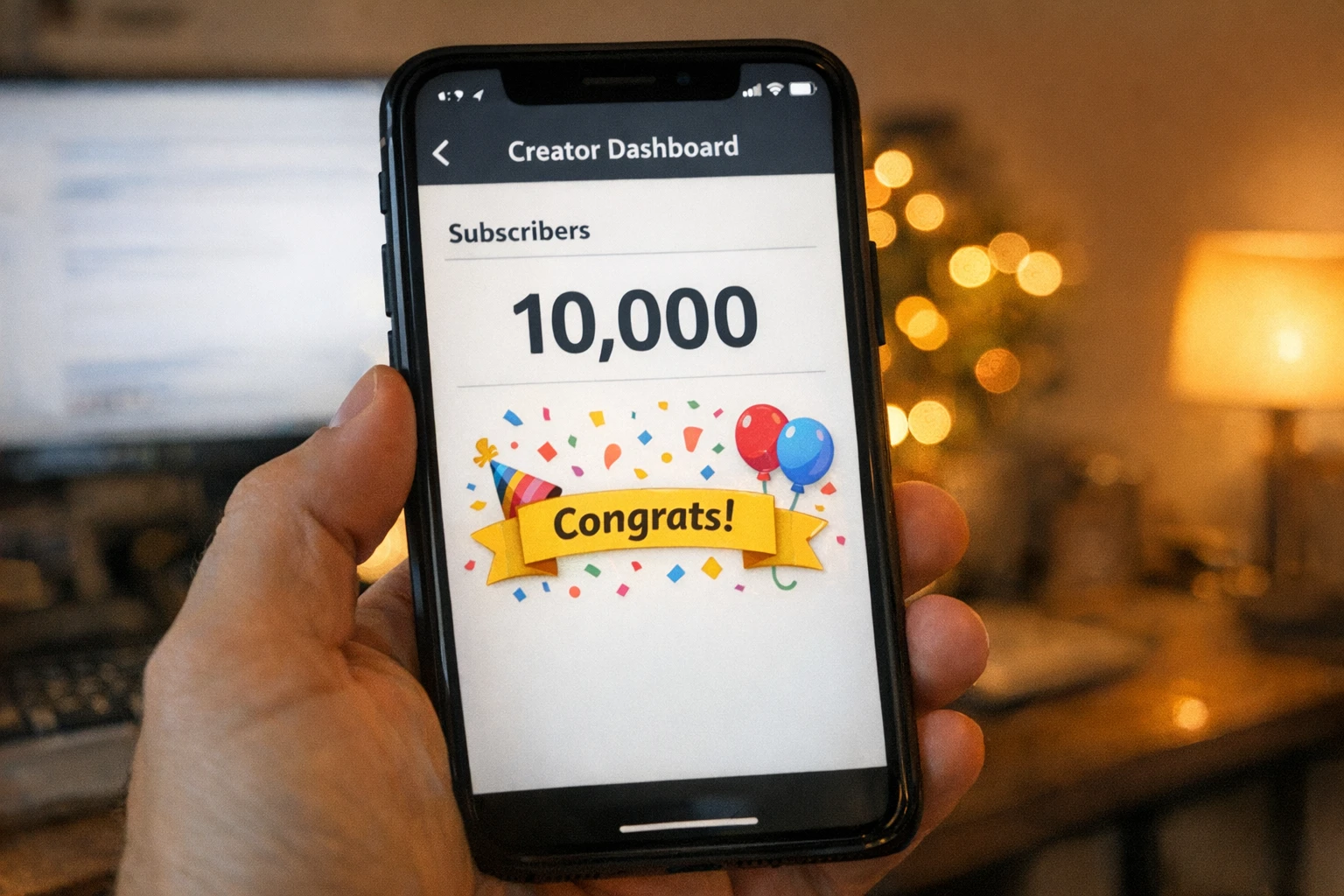
Story channels grow on subscribers, not one-off viral spikes
When Do You Monetize?
Short answer: later than you'd like, sooner than you think. Focus your first 30 days entirely on episodes and audience - monetization follows watch time, and serialized story content is a watch time machine. Once your channel crosses a platform's monetization threshold, ad revenue kicks in, and a loyal cast-driven audience is exactly what sponsors pay for.
When you're ready to think about revenue seriously, we've broken down every path - ad revenue, creator funds, sponsorships, and more - in our full guide to making money with fruit videos.
Frequently Asked Questions
Everything you need to know before you start a fruit channel
How do I start a fruit story channel?
Pick a lane first - drama, comedy, or kids content. Then open Fruit AI Stories in Autoclips, type your first episode idea, and the AI writes three story angles, each a 6-scene arc with a setup, a turn, and a gut-punch ending. Cast your fruit characters, save them so the same cast returns every episode, render, and publish. Batch your first 5-10 episodes before you launch so you can post daily from day one.
Do I need to show my face or use my voice?
No. A fruit story channel is completely faceless. Your 3D fruit characters are the stars - they deliver every line with lip-synced dialogue, so there's no camera, no microphone, and no on-screen presence required from you. You never record anything. You type ideas, pick storylines, and the characters do the performing.
How much does it cost to run a fruit story channel?
Cinematic story scenes start at 240 credits (~$1.20 per scene), so a full multi-scene episode costs about as much as a coffee. Compare that to commissioned animation at $500-$2,000+ per minute and the math is obvious: you can produce an entire month of daily episodes for less than one traditionally animated video.
How often should I post fruit story videos?
Daily posting is the sweet spot for a new fruit story channel. Consistency trains both the algorithm and your audience to expect the next episode. Because the AI generates three story angles for every idea you type, 10 ideas can turn into 30 potential episodes - batch a season in one sitting, then release one episode per day while you plan the next batch.
Which platform is best for a fruit story channel?
YouTube is the strongest home base because story content builds subscribers, and YouTube rewards returning viewers with long-term reach. TikTok is the fastest place to get discovered, and Instagram Reels adds a third audience for free. Since Fruit AI Stories renders in 9:16, 16:9, and 1:1, you can publish the same episode everywhere - and auto-publish pushes it to all your connected accounts automatically.
How do fruit story channels make money?
The main paths are ad revenue once you reach a platform's monetization threshold, creator funds and bonus programs, and brand sponsorships once your series has a loyal audience. Story channels tend to monetize well because their watch time and returning-viewer metrics are strong - viewers binge episodes back to back, which is exactly what ad-supported platforms pay for.
Start Your Fruit Story Channel This Week
The niche is wide open, the cast never asks for a day off, and your first season costs less than a night out. Pick your lane, save your characters, batch ten episodes, and let auto-publish do the rest.
Cinematic story scenes start at 240 credits (~$1.20 per scene) - 16 fruit types - 3 visual styles